A cheaper EV today can be the more expensive car in three years. When a showroom slashes six figures off a windshield sticker overnight, the smartest question isn't "How much did I save?"—it's "Why are they in such a hurry to clear this lot?"
This guide gives you a buyer's framework for Thailand's EV price war heading into 2027—covering the policy rules driving discounts, a five-point pre-purchase checklist, battery swapping vs. home charging, and when to buy now versus wait.
(Disclaimer: This article is for informational purposes only and does not constitute financial, legal, or investment advice. Always verify current promotional terms, warranty contracts, and financing conditions directly with official dealers and financial institutions before purchasing a vehicle.)
Why EV Prices in Thailand Keep Dropping
Walk through any Bangkok motor show and you will see aggressive cash discounts, free wallboxes, and first-year insurance bundles.
Those discounts are not happening by accident. They are driven by structural pressure inside Thailand's EV policy framework and global battery supply chains.
Under Thailand's EV 3.0 and EV 3.5 (2024–2027) incentive schemes managed by the Thailand Board of Investment (BOI) and enforced alongside The Excise Department of Thailand, automakers that received import duty exemptions and subsidies on imported Completely Built Units (CBUs) must fulfill strict local manufacturing offset mandates. Under the EV 3.5 framework, participating automakers must produce 2 locally assembled EVs for every 1 imported unit in 2026 (a 1:2 ratio), rising to 3 locally assembled EVs for every 1 imported unit in 2027 (a 1:3 ratio), with exported locally built EVs counting as 1.5 units toward the quota under updated BOI flexibility rules.
What does that mean on the showroom floor?
When multiple brands open local assembly plants in Rayong, Chonburi, and Chachoengsao at the same time to meet mandatory production quotas, supply surges faster than domestic loan approvals. To move factory volume and hit their quota deadlines before year-end, brands have to compete aggressively on price.
[JOHN: เติมประสบการณ์จริง]
The 5-Point Checklist Before You Sign the Booking Form
Before you let a limited-time campaign timer rush you into putting down a deposit, run the car—and the company behind it—through these five checks.
1. Depreciation and Three-Year Resale Math
Every time a brand cuts the new-car retail price by 100,000 or 150,000 Baht, the used-car ceiling for that exact model drops by at least the same amount overnight.
If you plan to drive the car for seven to ten years, short-term resale value matters much less. You lock in the fuel savings and enjoy the ride.
However, if you typically change cars every three to four years, sudden retail price cuts can leave you "underwater" on your auto loan—meaning your remaining loan balance is higher than what second-hand buyers are willing to pay. You can test different depreciation scenarios using our EV Resale & Ownership Tools before committing.
2. First-Class Insurance Renewals and Battery Warranty Fine Print
Many showroom promotions include "Free Year 1 First-Class Insurance." That sounds great at delivery—until month 12 arrives and you receive the Year 2 renewal quote.
Because EVs carry expensive single-piece body castings, bumper sensors, and underfloor battery packs, Year 2 EV insurance premiums are often significantly higher than equivalently priced combustion cars, with stricter conditions on authorized repair garages.
At the same time, read the battery warranty document line by line—do not just trust a billboard that says "8-Year or Lifetime Warranty." Check:
- Does the lifetime warranty apply only to the first registered owner?
- Does it become void if you exceed a strict annual mileage cap (such as 30,000 km per year) or miss a scheduled inspection?
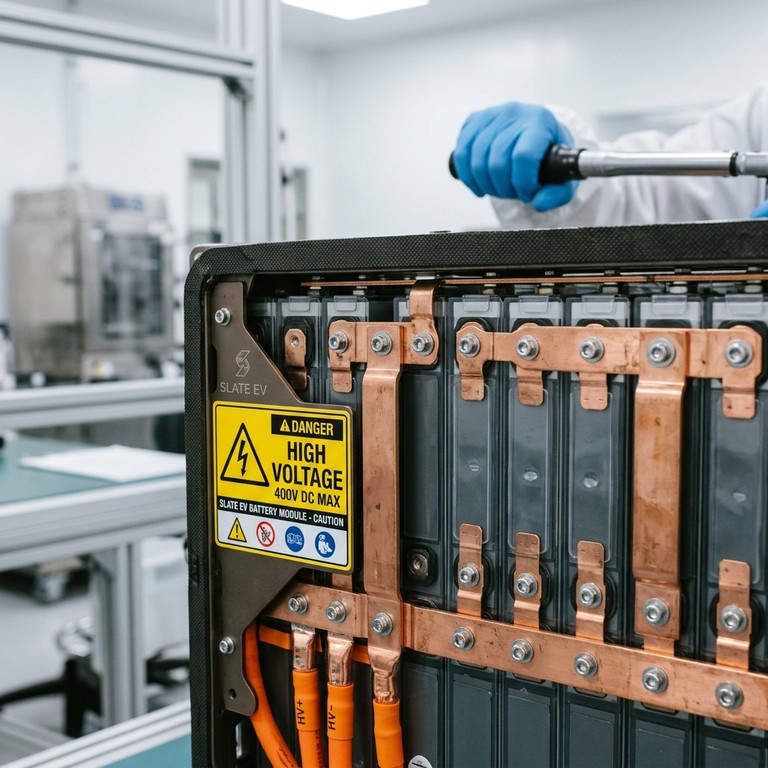
- What is the exact State of Health (SoH) threshold (commonly 70%) required to trigger a warranty claim, and does the brand replace the pack with a new unit or a refurbished module?
3. Charging Reality vs. Your Daily Parking Spot
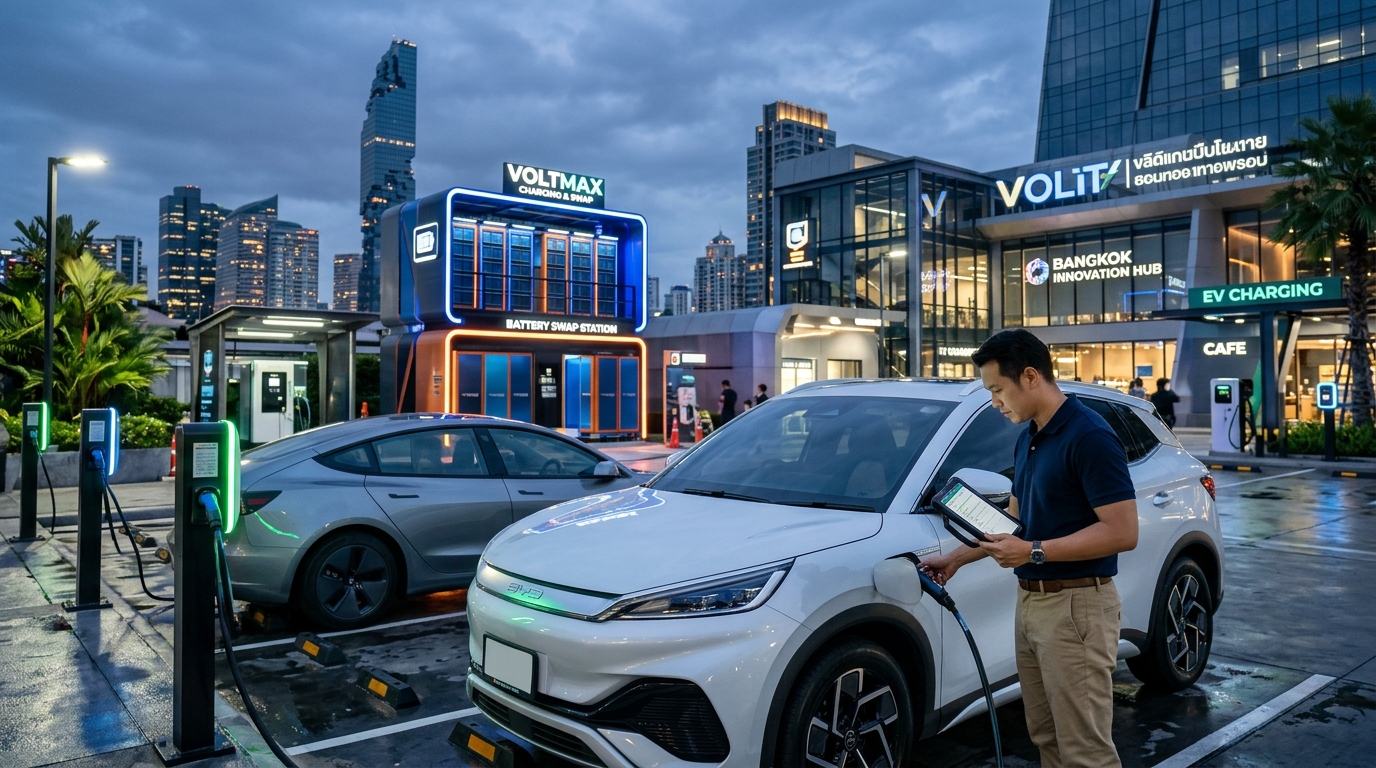
An EV is effortless to own when you wake up every morning to a charged car in your own driveway. It becomes a chore if you rely 100 percent on public DC fast chargers during Friday evening rush hour or long holiday weekends.
Before signing:
- Confirm whether your house has a TOU (Time of Use) electricity meter eligible for off-peak overnight charging rates, or whether your condominium juristic office permits wallbox installations at your parking slot.
- Compare the vehicle's real-world highway range—not just the brochure number—using our EV Real-World Range Calculator.
4. Service Bay Capacity and Body Parts Waiting Times
Selling 10,000 cars in a month is a marketing victory; servicing 10,000 cars with a small spare-parts warehouse is a customer headache.
Periodic maintenance on an EV is simple. The real bottleneck in Thailand is collision repair. Before choosing a brand, ask existing owners in model-specific community groups two blunt questions:
- "How long did you wait for a replacement bumper, headlight, or windshield after a minor accident?"
- "Does the brand operate a central parts distribution warehouse inside Thailand, or are collision parts still shipped per order from overseas?"
If a dispute arises over delayed repairs or contract terms, Thai buyers should also know their rights under the Office of the Consumer Protection Board (OCPB).
5. Total Financing Cost vs. Cash Discount Traps
Always ask the salesperson to calculate the total sum of all monthly installments plus down payment across two options:
- Option A: The headline cash discount (which sometimes carries a higher annual finance interest rate).
- Option B: A subsidized low-interest or 0% interest financing campaign with a smaller upfront discount.
Often, a slightly higher sticker price paired with a subsidized interest rate costs less over a 60-month loan than a flashy cash discount attached to a high interest rate.
Buy Now vs. Wait Six Months: A Simple Decision Framework
Should you take today's promotion, or wait to see if prices drop further in 2027? Use your driving profile to decide:
-
Buy Now If:
- You drive high daily mileage (60–100+ km per day in Bangkok traffic), where immediate monthly fuel savings outweigh potential future price adjustments.
- You can install a home charger on a TOU meter today.
- You plan to keep the vehicle for 5 to 8+ years, making short-term resale fluctuations irrelevant.
- The model you want is already locally assembled (CKD) in Thailand with an established domestic parts warehouse.
-
Wait 6 Months If:
- You drive less than 15,000 km per year and your current car is paid off and reliable.
- You have no home or workplace charging access yet.
- You are eyeing a newly launched brand that still has very few active service centers or body repair partners near your province.
- A major battery architecture refresh (such as faster 800V charging) for that exact model has already been unveiled overseas and is slated to arrive in Thailand soon.
Where Battery Swapping Fits In: Who Benefits First?
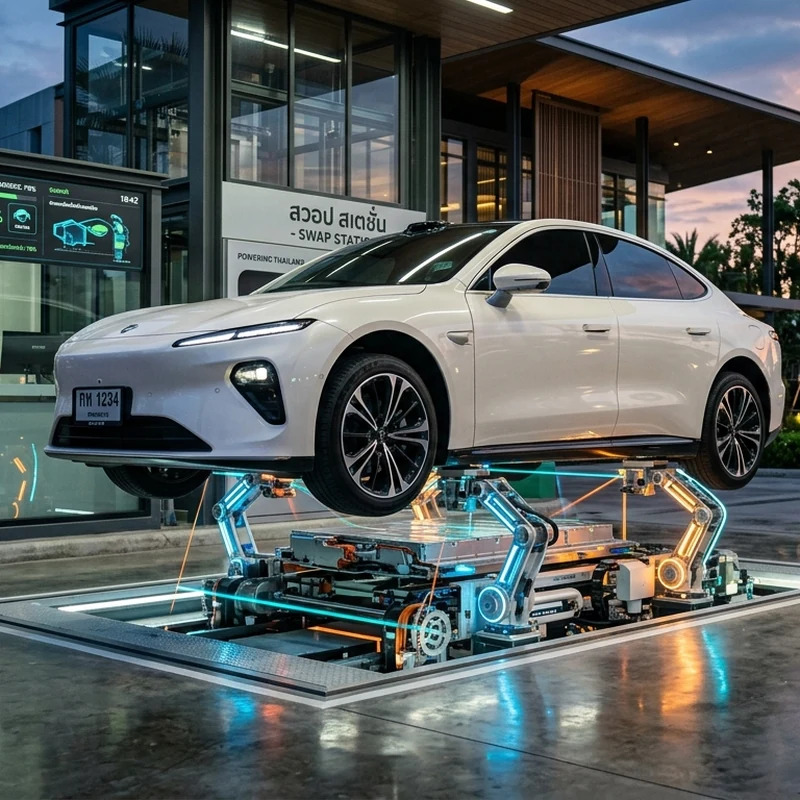
Following recent discussions around battery-swapping infrastructure in Thailand—including initiatives by players like GAC Aion and commercial fleet operators—many buyers wonder whether they should wait for swap-capable EVs.
Here is who actually benefits first from battery swapping:
- Commercial Fleets, Taxis, and Ride-Hailing Drivers (Immediate Winners): For a taxi or ride-hailing driver in Bangkok, every 45 minutes spent sitting at a DC charger is lost income. A 3-to-5-minute automated battery swap along major urban corridors directly increases daily operating hours and removes battery degradation worries for cars running 300+ km a day.
- Private Family Car Owners (Home Charging Still Wins for Most): If you park at home overnight for eight hours, plugging in a wallbox takes ten seconds and costs off-peak home electricity rates—without station swap fees or driving out of your way. Battery swapping mainly helps private owners who live in condos without charger access and commute past an active swap station daily.
My take
In my view, Thailand's EV price war is great news for consumers only if you stop shopping like you are buying a smartphone on a flash sale.
A car is a multi-year infrastructure commitment. The gap between the best and worst EV ownership experience in Thailand has very little to do with 0-to-100 km/h times or dashboard screens. It comes down to boring fundamentals: Can you charge at home? How much is Year 2 insurance? And if a motorbike clips your fender on Rama IX Road, will your car sit at a body shop for three days or three months?
Ignore the countdown banner on the stage. Do the five-point math first. If the fuel savings, home charging setup, and service network check out for your commute today, buy the car, enjoy driving it—and stop checking motor show price boards after you sign.
Quick Summary
- Policy drives the discounts: BOI EV 3.5 local assembly mandates (1:2 in 2026, 1:3 in 2027) are forcing factories to move volume fast.
- Check the 5 hidden costs: Audit 3-year resale risk, Year 2 insurance + battery warranty clauses, home TOU charging readiness, collision parts wait times, and total loan interest.
- Match timing to mileage: High-mileage drivers with home charging and a 5+ year horizon win by buying now; low-mileage drivers without home charging lose nothing by waiting.
- Battery swapping is fleet-first: Taxis and commercial drivers benefit immediately from swap stations, while overnight home charging remains simpler for most private owners.
If you were buying today, would you buy now or wait six months, and why?