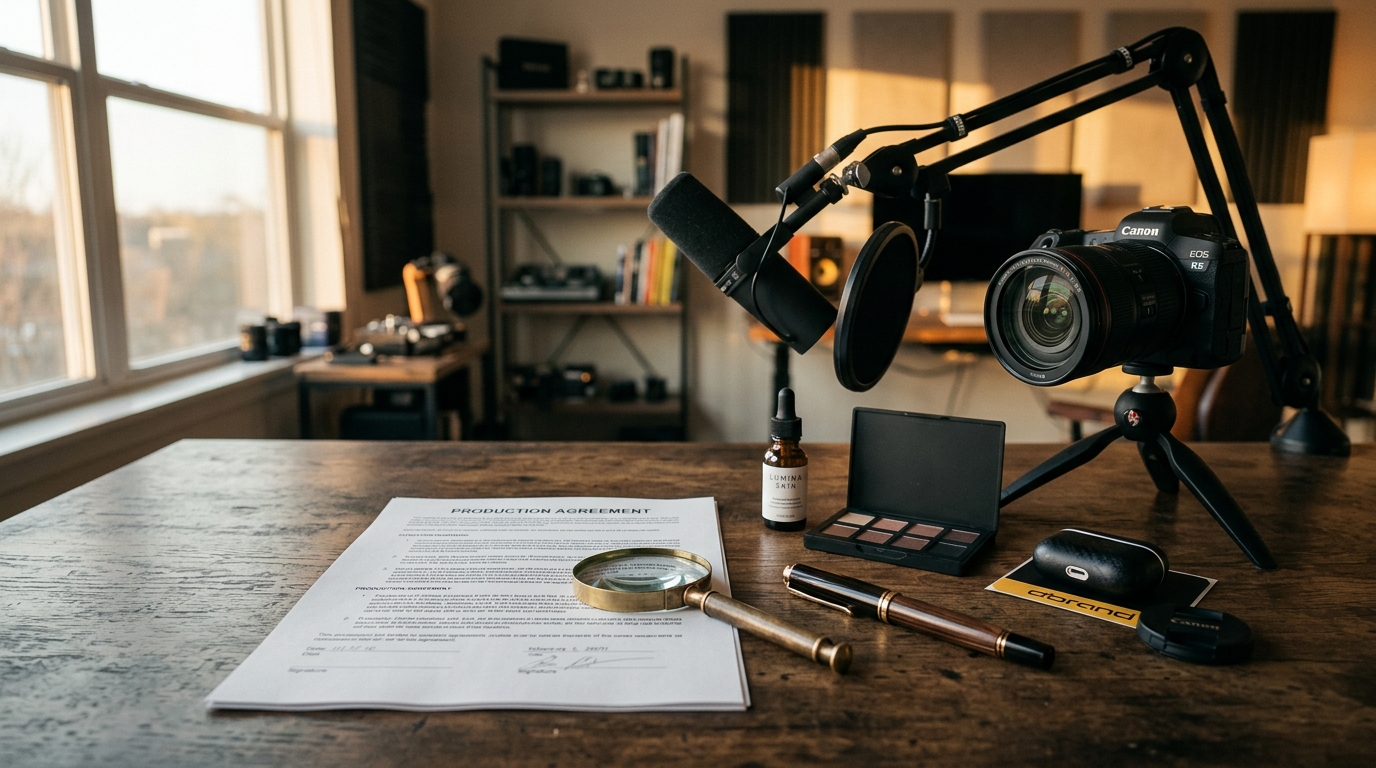
One bad sponsored post can cost you a year of trust. And once your audience decides you will read any script for a quick bank transfer, no editing trick or algorithm hack will make them believe your recommendations again.
This pre-flight checklist helps creators in Thailand evaluate brand deals safely—covering product vetting, five common contract traps, payment and tax paperwork, disclosure rules, and seven red flags to reject.
(Disclaimer: This article is for general educational purposes only and does not constitute legal, tax, or accounting advice. Always consult a qualified lawyer or certified tax professional before signing commercial agreements or filing taxes.)
Step 1: Vet the Brand and Product Before You Talk Money
Before you quote a single Baht on a new sponsorship inquiry, investigate what you are being asked to put your name next to.
Run every prospective sponsor through three baseline checks:
- Is the company a real, registered legal entity? Look up who is hiring you. Does the brand have an official website, a verifiable business address, and real customer support, or is it a week-old landing page running aggressive ads with no return policy?
- Is the product legally registered for sale in Thailand? If the product is a dietary supplement, cosmetic, skincare item, food product, or medical device, check its registration number with the Food and Drug Administration Thailand (FDA / อย.). If it is an electronic gadget or power adapter, check whether it complies with applicable Thai safety standards and consumer rules enforced by the Office of the Consumer Protection Board (OCPB / สคบ.). Never promote unlicensed gambling sites, unregulated investment schemes, or counterfeit goods—the legal liability in Thailand lands directly on the promoter as well as the seller.
- Can you test the physical product or software yourself before scripting? If a brand insists you read a pre-written praise script for a product they refuse to let you test first, you are not filming a review—you are acting in an infomercial using your personal credibility as collateral.
[JOHN: เติมประสบการณ์จริง]
Step 2: Audit the Five Contract Clauses That Trap Creators
Standard agency contracts are written to protect the client first. Before signing, check these five clauses:
1. Exact Scope of Work (Deliverables)
Make sure the agreement states the exact platform, video format (for example, one 60-to-90-second vertical 9:16 video), and posting window. Avoid vague phrases like "Creator will provide social media support for the campaign," which can later be stretched into demands for extra stories, link-in-bio placements, and event appearances.
2. Revision Limits and Script Lock
Specify that script and concept approval happens before filming, and cap post-production edits at one or two rounds of minor adjustments. Make it clear in writing that changes requested after an approved script has already been filmed will incur an additional reshoot fee.
3. Content Usage Rights and Paid Ad Duration
Does the brand only want the video posted organically on your channel, or does the contract quietly say "Client owns all intellectual property and perpetual global media rights in all formats"? If a contract grants perpetual paid advertising rights, the brand can run your face on paid social media commercials for years without paying you another Baht. Limit ad-boosting and commercial licensing to a specific duration (such as 30 or 90 days).
4. Category Exclusivity Window
Check the exclusivity clause carefully. If you review a budget 500-Baht phone charger and sign a broadly worded clause prohibiting you from working with "any consumer electronics or technology brand for 12 months," you just locked yourself out of reviewing laptops, cameras, and smartphones for a year. Keep exclusivity narrow (specific product sub-category) and time-bound.
5. Cancellation and Kill Fee
What happens if you spend two days scripting, filming, and editing a video, and the brand suddenly cancels the product launch? Include a kill fee clause: if the client cancels after script approval or after filming is completed through no fault of the creator, a defined percentage (typically 50% to 100%) of the fee remains payable for the production work already performed.
Step 3: Verify Payment Terms and Tax Paperwork
A great sponsorship deal on paper means nothing if you spend six months chasing an unpaid invoice.
Before starting production, lock down the financial mechanics in writing:
- Payment Milestone and Credit Term: Establish whether there is an upfront deposit upon signing, and verify the exact credit term for the final balance—whether it is 15, 30, 45, or 60 days after publishing or after the original invoice reaches the agency's accounting department.
- Required Billing Documents: Ask upfront what documents finance needs (signed quote, ID/company registration, bank page, analytics screenshot) to avoid payment delays.
- Withholding Tax and VAT Clarity: Clarify whether the quoted figure is net or subject to Thailand Withholding Tax, and whether VAT applies if you operate as a registered company. Because tax treatment depends on whether you receive income as an individual or a company—and how the contract classifies the work—always consult a certified accountant or tax advisor.
Step 4: Watch Your Product Claims and Platform Disclosures
Two rules separate professional creators who stay in the game for a decade from creators who get their accounts penalized or face regulatory trouble:
1. Never Make Unverifiable Miracle Claims
Be ruthless with scripts that ask you to promise medical cures, guaranteed weight loss, instant skin transformations, or guaranteed financial returns. In Thailand, the Food and Drug Administration (อย.) and the Office of the Consumer Protection Board (สคบ.) actively monitor exaggerated or false advertising claims—especially in supplements, cosmetics, and health products.
Instead of repeating exaggerated superlatives ("This cream erases wrinkles in 3 days" or "Best product in Thailand"), stick to verifiable specs and honest first-person experience: "Here is the texture on my skin after using it for two weeks," or "The manufacturer specs rate this battery at X mAh, and in my test it lasted Y hours."
2. Use Official Platform Commercial Disclosure Toggles
Both major video platforms require clear disclosure when content is sponsored, gifted, or commercially incentivized:
- On TikTok, TikTok's Commercial Content Disclosure policy requires creators to turn on the Commercial Content Disclosure toggle (selecting Promotional content for your own business or Branded content for third-party partnerships) whenever a video promotes a product or service in exchange for payment, free items, or affiliate commissions. Failing to toggle disclosure can get your video restricted or removed.
- On YouTube, YouTube's Paid Product Placements, Sponsorships & Endorsements policy requires creators to check the paid promotion box inside YouTube Studio so viewers see an automatic disclosure notice, while also complying with local advertising laws.
Being transparent with your viewers doesn't hurt your credibility—hiding a sponsorship and getting caught does.
7 Red Flags That Mean You Should Walk Away Immediately
If you spot any of these seven warning signs during negotiations, polite rejection is almost always cheaper than taking the money:
- "Urgent! Shoot tonight, post tomorrow, contract comes later": Artificial urgency is used to get you to publish before any paperwork or deposit exists.
- They ask you to hide the sponsorship disclosure: Any brand asking you to violate platform rules or pretend you bought the product yourself when they paid you is asking you to risk your channel for their campaign.
- They demand you trash a named competitor: Comparative testing with objective data is fine; reading a script designed to disparage a named rival brand exposes you to legal headaches.
- Unlimited revisions with no script sign-off: If a client refuses to approve a script beforehand and says "Just shoot it first and we'll see how we feel," prepare for endless reshoots.
- Perpetual global ad rights slipped into a standard organic rate: If they want to own your face and voice forever for the price of a single post, walk away or rewrite the clause.
- Miracle health, crypto, or "get-rich-quick" claims: No payout is worth hurting your audience's health or finances.
- They ask you to pay a "registration fee," "shipping deposit," or click a suspicious link to download the brief: That is not a brand deal—that is a phishing scam targeting creators.
[JOHN: เติมประสบการณ์จริง]
My take
When you are building a channel, turning down money feels painful. When a brand offers a sum that covers a month of studio rent or a new lens, it is tempting to tell yourself, "It's just one 60-second video. My followers won't mind."
They do mind. Even if nobody leaves an angry comment, the next time you genuinely praise a product you love, viewers will silently wonder if you were paid to say it.
Your equipment can be replaced. Your editing software can be upgraded. Your audience's trust is the only asset in the creator economy that cannot be bought back once you sell it too cheaply. Protect it fiercely.
Quick Summary
- Vet before quoting: Verify the company, check Thai FDA (อย.) / OCPB (สคบ.) legality, and insist on testing the product yourself.
- Lock down the big 5 contract clauses: Define exact deliverables, cap revisions after script approval, time-limit ad usage rights, narrow exclusivity, and include a cancellation kill fee.
- Get payment and disclosure right: Clarify payment credit terms and tax paperwork upfront, avoid exaggerated claims, and always enable official TikTok and YouTube paid-promotion disclosures.
- Respect the 7 red flags: If a client demands rushed work without a contract, hidden disclosures, or miracle claims, say no and protect your name.
What's the one red flag that made you turn down a deal?